

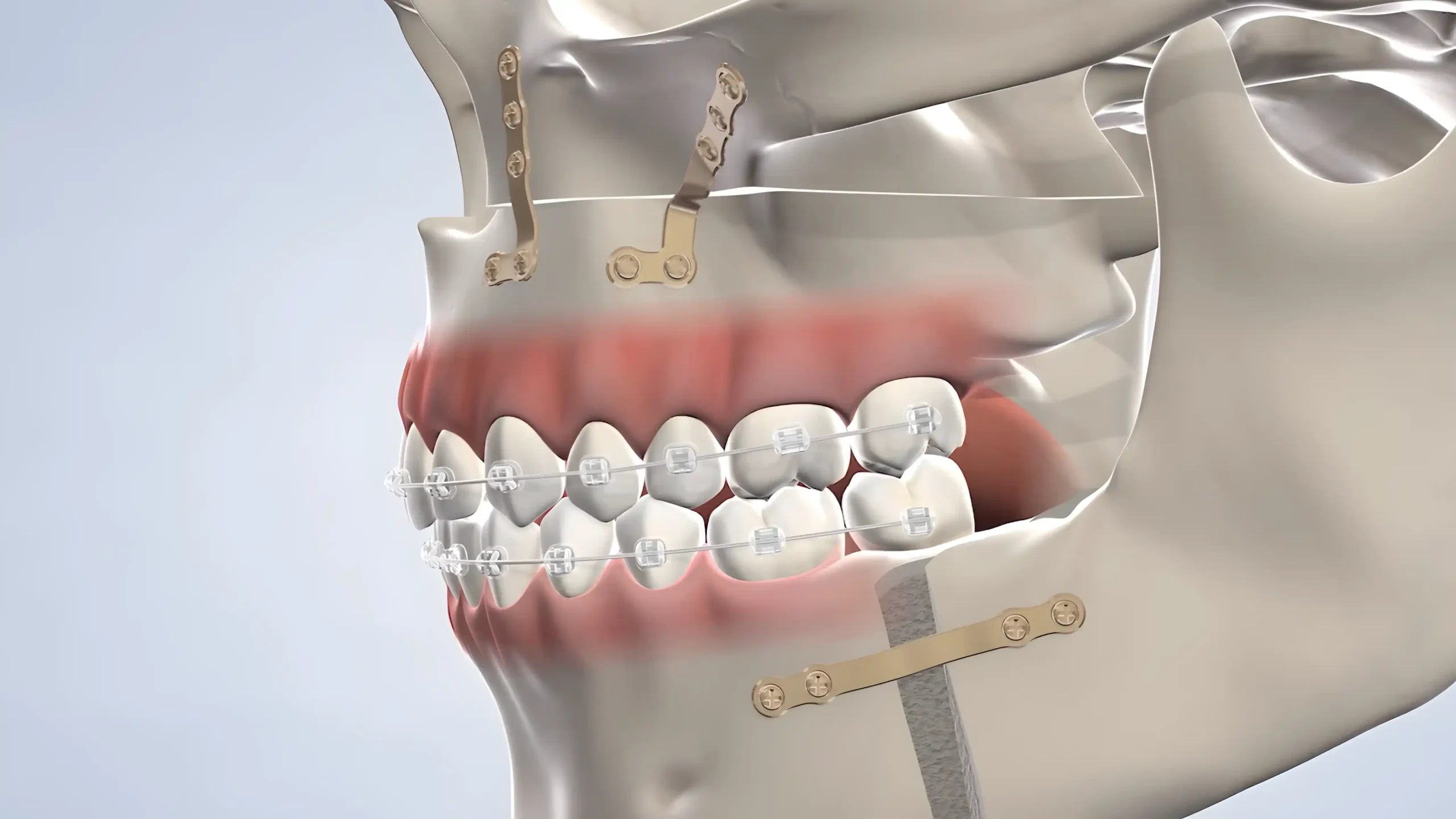
What Is Corrective Jaw Surgery?
Corrective jaw surgery, also called orthognathic surgery, repositions the upper jaw, lower jaw, or both. It is used when differences in the jaw bones keep the teeth and jaws from lining up properly.
Braces or clear aligners can move your teeth. They cannot correct certain differences in the jaw structure underneath. In these cases, orthodontics and jaw surgery may be combined to bring the teeth and jaws into proper alignment.
Every treatment plan is built around you. Our team plans each step carefully to address both how your jaw works and how your face is balanced.
Do I Need Jaw Surgery?
Signs You May Benefit From a Jaw Surgery Evaluation
You may need an evaluation for jaw surgery when a significant jaw misalignment causes problems with function or structure. Not every bite problem requires surgery.
Signs and conditions may include:
- Difficulty biting or chewing food
- Difficulty bringing the lips together comfortably
- An underbite, overbite, open bite, or crossbite related to jaw position
- A lower jaw that noticeably sticks out or sits back
- Facial imbalance or asymmetry related to jaw development
- Excessive tooth wear caused by an abnormal bite
- Difficulty speaking related to jaw alignment
- Certain breathing concerns associated with jaw structure
- Jaw misalignment that orthodontic treatment alone cannot fully correct
A comprehensive evaluation shows where your concerns come from. The cause may be your teeth, your jaw structure, or a combination of both.
How Do Jaw Surgery and Orthodontic Treatment Work Together?
A Coordinated Approach to Your Care
For many patients, corrective jaw surgery and orthodontics work together as one treatment plan.
Orthodontic treatment may come first to position the teeth properly within each jaw. Your oral and maxillofacial surgeon then repositions the jaw or jaws according to your surgical plan. More orthodontic treatment may follow surgery to fine-tune your bite and final tooth alignment.
Your oral surgeon and orthodontist stay in close contact through every stage. Their shared goal is a stable, functional, and balanced result.
What Are the Benefits of Corrective Jaw Surgery?
Correcting a significant jaw misalignment can offer functional and structural benefits. Your results depend on your individual condition.
Treatment may help:
- Improve the alignment of the upper and lower jaws
- Create a more functional bite
- Make chewing and biting more efficient
- Address certain speech difficulties related to jaw position
- Reduce abnormal tooth wear caused by bite problems
- Improve facial balance and symmetry
- Address certain airway concerns when clinically appropriate
We will talk through your treatment goals and expected outcomes in detail during planning.
What to Expect From Orthognathic Surgery
How Is Each Jaw Surgery Plan Personalized?
Corrective jaw surgery starts with a detailed evaluation and careful treatment planning.
Your surgical team reviews your jaw structure, facial anatomy, bite, teeth, and treatment goals. Together, these details shape a surgical plan made for you. Advanced imaging may also be used to show how your teeth, jaws, and surrounding facial structures relate to each other.
Orthognathic treatment often happens in several phases. Our team will help you understand each one: preparing for surgery, the procedure itself, recovery, and coordination with your orthodontic care.
You can count on clear communication from your first visit to your last.
Frequently Asked Questions About Jaw Surgery
What Is the Difference Between Jaw Surgery and Orthodontic Treatment?
Orthodontic treatment, such as braces or clear aligners, moves the teeth. Corrective jaw surgery repositions the upper jaw, lower jaw, or both. Braces or aligners alone cannot correct certain differences in the underlying jaw structure. In these cases, orthodontics and orthognathic surgery may be combined to properly align the teeth and jaws.
Does Every Bite Problem Need Jaw Surgery?
Not every bite problem requires surgery. An evaluation for orthognathic surgery may be recommended when significant jaw misalignment causes functional or structural concerns. A comprehensive evaluation can show where your concerns come from. The cause may be mainly your teeth, your underlying jaw structure, or a combination of both.
Will I Need Braces Before and After Jaw Surgery?
For many patients, yes. Orthodontic treatment may be used before surgery to position the teeth within each jaw. Your oral and maxillofacial surgeon then repositions the jaw or jaws. More orthodontic treatment may follow to refine your bite and final tooth alignment. Your surgeon and orthodontist coordinate closely through each stage of care.
How Is Corrective Jaw Surgery Planned?
Your surgical team evaluates your jaw structure, facial anatomy, bite, teeth, and treatment goals to build an individualized surgical plan. Advanced imaging may be used to better understand how your teeth, jaws, and facial structures relate. Our team will also explain what to expect before surgery, during the procedure, and through recovery.